Running an HVAC Business: The Owner's Operations Guide.
My dad ran a residential HVAC shop for 22 years. He was a great technician and a decent businessman, but the gap between those two things cost him about $200,000 in unbilled work over a decade — callbacks he didn't charge for, change-outs that closed at 40% because the tech didn't have a price, and a dispatcher who scheduled by gut instead of skill-match. He wasn't alone. Most HVAC owners I talk to in 2026 are still fighting the same three problems: inconsistent field execution, dispatcher overload, and a comp plan that accidentally punishes the behaviors they want. This guide is about running an HVAC business at the operations level — not marketing, not financing, not licensing. The dispatch board, the callback rate, the technician comp structure, the office workflow that keeps a 10-truck shop from feeling like controlled chaos. If you're scaling from 5 to 25 techs or trying to stop the leaks in a shop you've already built, this is the playbook.
What Actually Breaks When You Scale an HVAC Business
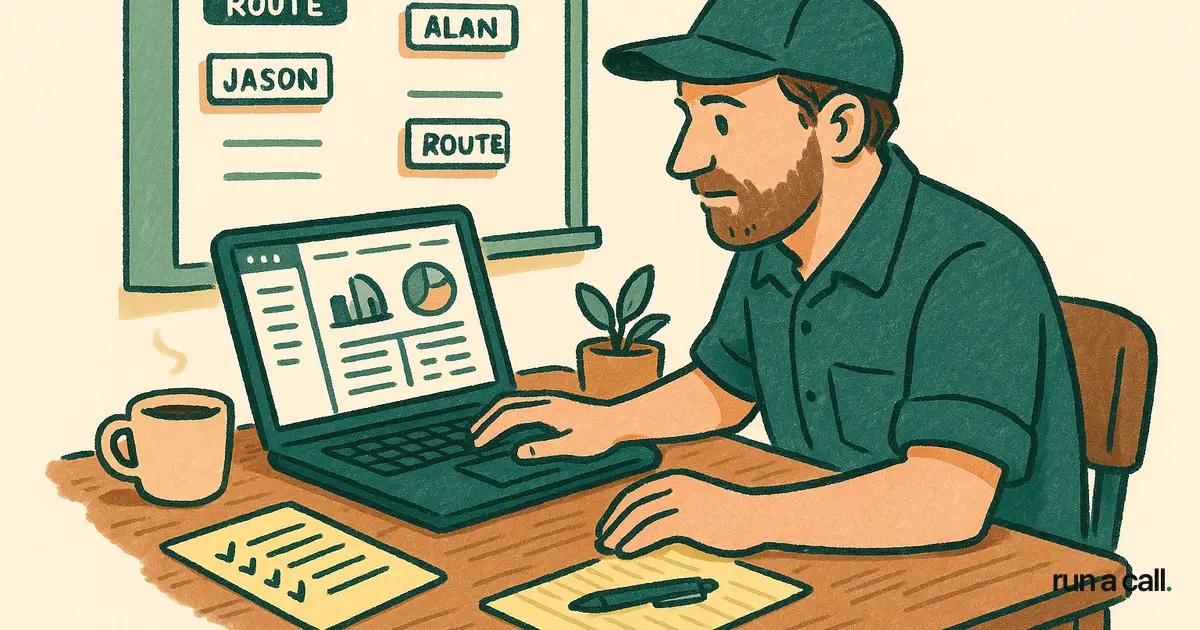
The first thing that breaks when you grow past 5 techs is the dispatcher. At 5 techs, the owner usually dispatches. You know every tech's skill set, every truck's stock level, every customer's history. At 8 techs you can still fake it. At 12, you're drowning.
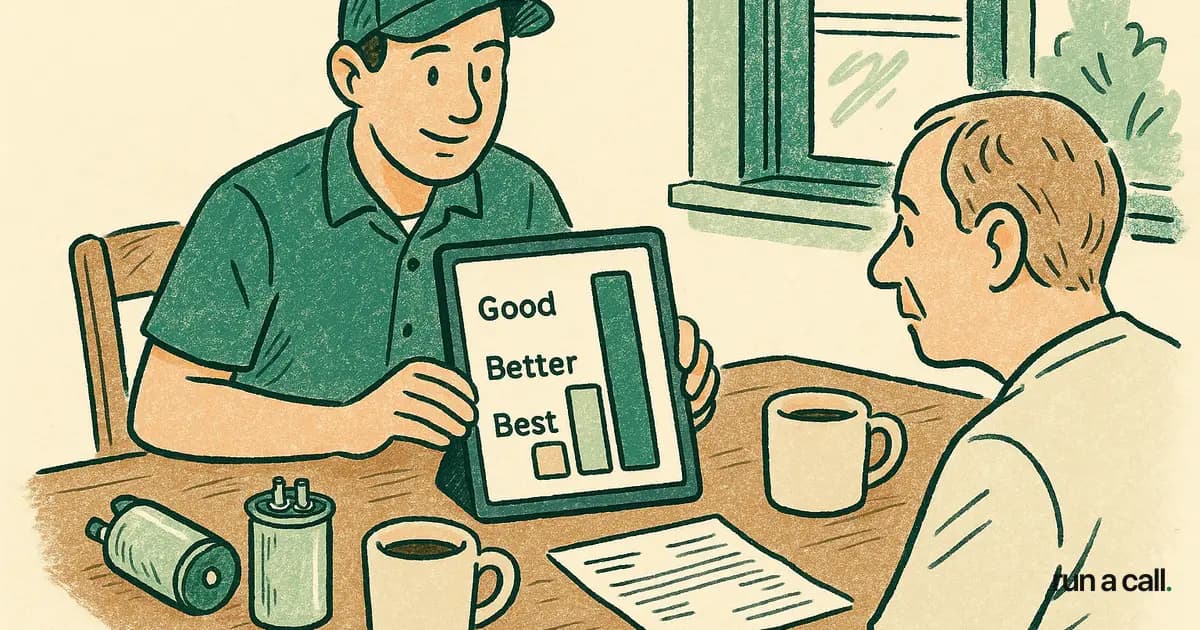
The second thing that breaks is your pricebook — or the absence of one. When you had 3 techs, you could coach the kitchen-table presentation on every change-out. At 10 techs, two of them are quoting from memory, one is low-balling to close, and one is refusing to sell accessories because he doesn't want to feel pushy. Your average ticket is all over the place.
The third thing is callbacks. As volume grows, callbacks become invisible unless you're tracking them. A 5% callback rate on 50 calls a week is 2-3 callbacks — annoying but manageable. The same rate on 200 calls is 10 callbacks a week, which is two full technician-days of uncompensated labor. Track callback rate by tech from day one, not after it becomes a problem.
HVAC Dispatcher Training: What the Job Actually Requires
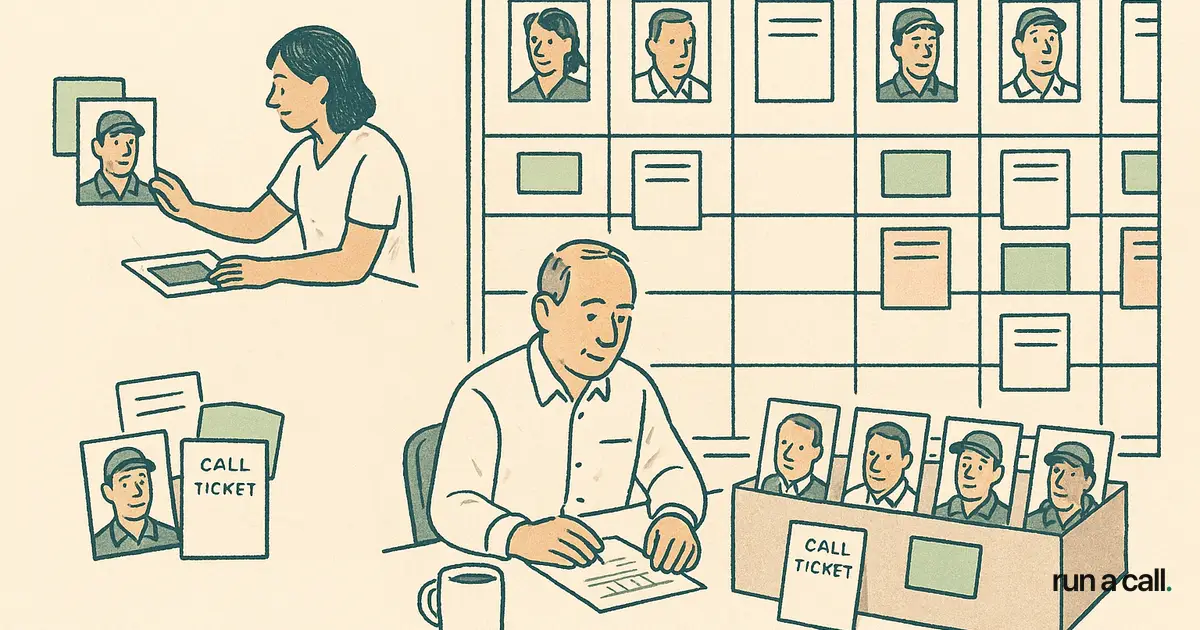
Dispatcher training in most HVAC shops means showing someone how to use the software. That's not dispatcher training — that's data entry training. The actual skill set is load-balancing, geographic routing, tech-to-job skill matching, and managing customer expectations when the board blows up at 2pm on a 98-degree day.
A dispatcher needs to know which tech can do an electrical disconnect without a second trip, which one closes change-outs consistently, and which one should never be sent on a first-call for a high-value customer without a ride-along first. That knowledge doesn't come from a software manual. It comes from intentional ride-alongs, weekly debrief rituals, and a dispatch board that surfaces skill-match data — not just availability.
The ritual I saw work best in my dad's shop (and later in shops I've worked with directly): a 15-minute morning huddle where the dispatcher walks the board, flags any skill-gap risks in the day's queue, and surfaces the two or three calls most likely to generate a same-day change-out conversation. That one ritual is worth more than most dispatcher training programs I've seen.
If your dispatcher is reactive all day — answering calls, moving jobs, handling complaints — they have no capacity to be proactive. The dispatcher role scales when you give them a clear morning ritual, a pricebook they trust, and software that shows them the board instead of hiding it behind 12 clicks.
HVAC Technician Compensation That Drives the Right Behaviors
Flat hourly pay is a fine starting point, but it has a ceiling — and it accidentally rewards slow techs and punishes fast ones. The comp plans that work in residential HVAC shops at the 10-25 tech level combine a base (hourly or salary) with spiff structures tied to close rate on change-outs, accessories attached per call, and callback-free work.
The accessories piece matters more than most owners realize. A tech who consistently attaches a capacitor upgrade, an IAQ product, and an SPP on maintenance calls is generating $150-400 in incremental revenue per visit without a comfort advisor in the room. Pay that tech a flat $25-40 spiff per accessory category closed, and you've created a field sales rep who still fixes equipment first.
The callback clause is equally important. If a tech's work generates a callback within 30 days, they go back on their own time — or it reduces their spiff pool for the period. That single rule, enforced consistently, cuts callbacks faster than any training program. It aligns the tech's financial interest with doing the job right the first time.
According to BLS 2024 Occupational Employment data, HVAC technician median pay sits around $57,000 annually. Shops running well-designed spiff plans routinely see top techs earning $75,000-90,000 — and those techs stay. Turnover in HVAC is brutal; comp plan design is one of the few retention levers you fully control.
HVAC Office Workflow: Eliminating the Gaps Between the Phone and the Field
Most HVAC office workflow problems are handoff problems. The CSR takes a call, enters partial job details, and the dispatcher dispatches blind. The tech arrives without truck stock visibility. The invoice goes out three days late because the tech's notes were incomplete. Each handoff is a place where revenue leaks or customers get frustrated.
The fix isn't more staff — it's structured handoffs. A call intake form that captures system age, equipment type (mini-split, RTU, ducted, ductless), and whether the customer has a service contract takes 90 seconds more per call and saves the dispatcher 10 minutes of back-and-forth. A job closeout checklist that requires the tech to enter a reason code before closing the ticket catches missing accessories conversations and incomplete installs before the truck leaves.
Accounting integration matters here too. When your field software doesn't talk to your accounting software, someone is manually re-entering invoices — and that person makes errors. Run a Call connects to QuickBooks Desktop so completed jobs flow to accounting without double entry. It sounds boring. It saves 5-8 hours a week in mid-size shops.
The ops stack for a 10-20 tech residential HVAC shop doesn't need to be complicated. Scheduling, dispatch, flat-rate pricebook, job closeout, and accounting sync. That's it. Every additional feature you add is another thing your dispatcher and techs have to learn and maintain. Simplicity is a design choice, not a compromise.
HVAC Callback Rate: The Number Most Owners Track Too Late
The industry benchmark for HVAC callback rate is roughly 3-5% of completed service calls, though you'll find wide variance depending on who's counting and what qualifies as a callback. What matters more than the benchmark is your trend by technician — because a shop average hides everything.
A shop with a 4% average callback rate might have two techs at 1% and one tech at 14%. The 14% tech is destroying customer relationships, burning truck time, and — if they're on a spiff plan without a callback clause — costing you money on every rework call. You can't fix what you can't see.
Track callbacks by closing tech, not by the tech who goes back. The tech who goes back might be a different person, which masks the original source of the problem. Tag every callback job to the tech who did the initial work, and review it weekly in your dispatcher debrief ritual.
Callbacks also distort your close rate data. A tech who closes change-outs at 60% but generates a 12% callback rate isn't actually performing at 60% — their effective revenue per job is much lower once you account for rework labor. Build both numbers into your weekly scorecard.
Choosing Software That Fits How an HVAC Shop Actually Runs
Software choice is an operations decision, not a technology decision. The question isn't which tool has the most features — it's which tool your dispatcher will actually use at 2pm when the board is blown up and three techs are calling in at once.
For shops in the 5-25 tech range, the market has several credible options. Housecall Pro is approachable and priced accessibly. Jobber works well for lighter-touch field ops. FieldEdge has strong pricebook depth for HVAC-specific categories. Service Fusion offers solid dispatch for shops that run both residential and commercial. ServiceTitan has the most feature surface area — but it also has a 6-12 month onboarding timeline documented in Capterra reviews, setup fees ranging from $5,000 to $50,000, and a 42% pricebook setup failure rate among shops that never finish configuration. For a growing shop, that's a real ops risk.
Run a Call is built specifically for residential HVAC shops at the 5-25 tech size. Flat monthly price per shop — no per-tech fees, no setup cost. The dispatch board uses explainable AI dispatch with thumbs feedback, so your dispatcher can see why a tech was suggested and push back when the system is wrong. It's not a black box. If you want to see how it compares to the bigger tools, the ServiceTitan alternative for HVAC breakdown covers the tradeoffs directly.
The best software for your shop is the one your team will actually complete jobs in. Take a walk through Run a Call and judge it on that standard — not on a feature checklist.
Frequently asked
What is a good callback rate for an HVAC business?
A callback rate of 3-5% of completed service calls is a common industry reference point, but the more important number is your callback rate by technician. A shop average hides outliers — one tech at 14% can drag your entire operation. Track callbacks weekly by the tech who did the original work, not by who went back.
How do I scale an HVAC business past 10 technicians?
Scaling past 10 techs requires three things to be in place before you hire: a trained dispatcher (not just a software user), a flat-rate pricebook your techs actually use in the field, and a callback tracking system that ties rework to the originating technician. Most shops that stall at 10-12 techs are missing at least one of these. Fix the ops infrastructure first, then add headcount.
What should HVAC technician compensation look like?
A base wage (hourly or salary) plus spiffs tied to close rate on change-outs, accessories attached per call (capacitors, IAQ products, SPPs), and a callback clause that reduces the spiff pool for rework within 30 days. This structure aligns the tech's income with the behaviors you actually want — selling appropriately, closing change-outs, and doing the job right the first time. According to BLS 2024 data, median HVAC tech pay is around $57,000; shops with well-designed spiff plans regularly see top techs earning $75,000-90,000.
What does good HVAC office workflow look like?
Good HVAC office workflow eliminates handoff gaps: structured call intake that captures system type and service history, a dispatch board with skill-match visibility, job closeout checklists the tech completes before leaving the site, and accounting integration that removes manual invoice re-entry. Every gap between the phone and the field is a place where revenue leaks or customers get frustrated.
How long does it take to train an HVAC dispatcher?
Learning the software takes days. Learning to dispatch well takes 60-90 days of deliberate practice — ride-alongs to understand tech skill levels, weekly debrief rituals on the day's board, and repetitions managing real schedule blowups. Dispatcher training programs that skip the ops judgment component and only cover software clicks produce data-entry clerks, not dispatchers.
Ready to switch HVAC software?
Walk through the dispatch board, pricebook, and mobile app in 30 minutes. No commitment.

Co-founder of run a call. Owns product and operations. AI Strategist; built and sold an AI process-automation firm; before that ran transformation programs at HP.
Read full bio →