HVAC Lead Generation: What Actually Books More Calls.
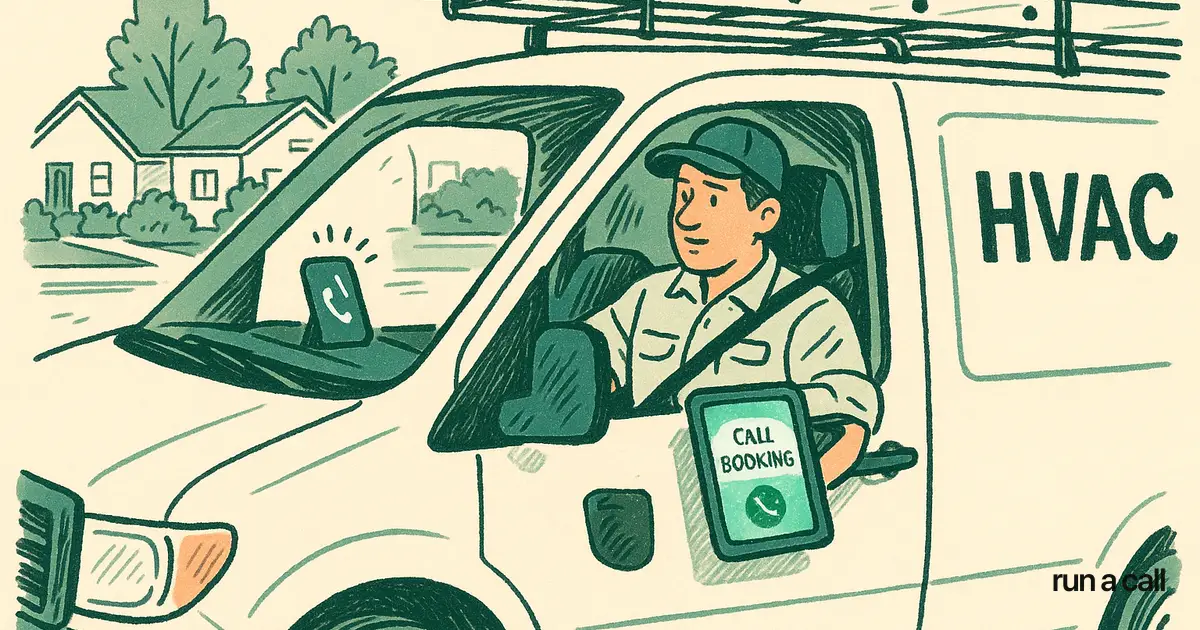
Forty percent of HVAC owners say word-of-mouth is still their number-one lead source — and most of them say it like it's a strategy. It isn't. Word-of-mouth is a result. The shops that grow past 10 techs build systems that manufacture that result on purpose: Google Local Services Ads running year-round, a pricebook tight enough to close at the kitchen table, and a membership program that turns a $129 tune-up into a $1,200-per-year customer relationship. This article breaks down the channels that actually move the needle for a 5-25 tech residential shop in 2026, ranked by cost-per-booked-call and time-to-first-result.
Why Most HVAC Lead Generation Spend Is Wasted
The average residential HVAC shop with 8-12 techs spends $3,500-6,000 per month on marketing and can't tell you which channel booked last Tuesday's change-out. That's not a marketing problem — that's a tracking problem dressed up as a marketing problem.
When my dad ran his shop, every new customer got asked one question at booking: "How did you hear about us?" He wrote the answer on the job ticket in pencil. That was his attribution model. It worked better than shops spending $500/mo on software they never open.
Before you add a channel, close the measurement loop on what you're already running. If you can't answer "what did I pay per booked call last month from Google Ads vs. LSAs vs. referral," you're optimizing blind. Most HVAC-specific field service software — including the one you're probably using — has call tracking built in. Use it.
Google Local Services Ads: The Highest-ROI Channel for Residential HVAC
Google Local Services Ads are the single best-performing paid channel for most residential HVAC shops right now. You pay per lead — not per click — and Google's own "Google Guaranteed" badge does meaningful trust work before the customer even dials.
For a shop in a mid-size metro, expect $25-60 per booked call during shoulder season and $60-120 during the peak of a heat wave when every competitor is bidding up. Those numbers beat traditional Google Ads PPC by 30-50% in most markets, per conversations with shops running both simultaneously.
The catch: LSA ranking is heavily driven by your review count and recency. A shop with 200 reviews at 4.8 stars will beat a shop with 40 reviews at 4.9 stars almost every time. The shops winning LSAs in 2026 are the ones who built a review-collection habit two years ago — asking every satisfied customer face-to-face at the end of the job, not relying on an email that lands in spam.
One tactical note: LSAs don't cover every job type. RTU replacements, mini-split installs, and IAQ packages often fall outside LSA categories. That's where HVAC Google Ads PPC fills in.
HVAC Google Ads: When PPC Makes Sense
HVAC Google Ads PPC makes sense when you need volume fast — new market entry, a tech you just hired who needs to stay busy, or filling gaps left by LSA category limits. The cost is higher (expect $8-20 per click in competitive metros, $40-150 per booked call depending on conversion rate), but you control the targeting in ways LSAs don't allow.
The biggest PPC mistake HVAC owners make: sending ad traffic to their homepage. Your homepage is for brand credibility. Ad traffic needs to land on a page with one job — get the visitor to call or book. One offer, one phone number, one form. Everything else is a distraction that drops your conversion rate and raises your cost per call.
For change-out campaigns specifically, a well-structured Google Ads campaign targeting "AC replacement [city]" or "furnace replacement [city]" can generate $8,000-15,000 average-ticket jobs at a cost-per-acquisition that pencils even at $300-400 per booked appointment. The math works if your comfort advisor closes at 35%+ and you're tracking all the way through to revenue, not just to the call.
HVAC Membership Marketing: Your Most Durable Lead Engine
A well-run SPP (service protection plan) or membership program isn't just a revenue stream — it's a lead generation machine. Members call 3-4 times per year on average versus once every 2-3 years for one-time customers, per operator data shared across multiple discovery calls. They also refer at roughly twice the rate.
The kitchen-table math: a $19.99/mo membership customer generates $240/year in membership revenue plus roughly $600-900 in add-on work (IAQ accessories, capacitors, refrigerant top-offs, filter changes). Over three years that's a $2,500-3,200 lifetime value from a customer your competitor is acquiring once for $80.
Membership marketing doesn't require a huge budget. The shops crushing it in 2026 are doing three things: pitching the membership on every maintenance call ("most of my customers are on our plan — want me to show you how it works?"), running a targeted direct mail campaign to their existing one-time customer list twice per year, and using their HVAC website to explain the plan clearly with a one-click sign-up. No complicated funnel needed.
The ops side matters as much as the marketing side. If your dispatcher can't instantly see which calls are members vs. non-members, your techs aren't giving members priority service — and members churn when they feel like regular customers. Your field service software needs to surface membership status on the dispatch board, not buried three clicks deep.
Your HVAC Website: Built to Convert, Not to Impress
Most HVAC websites are built for the owner's ego, not the customer's next step. A customer searching "AC repair near me" at 2pm on a Tuesday in July has one question: can you come today? Your website's job is to answer that question and get them to call or book in under 15 seconds.
The non-negotiables: a phone number in the top-right corner of every page (click-to-call on mobile), a booking widget or contact form above the fold, and load time under 3 seconds. Everything else — the about-us page with the team photo, the blog, the service area map — is secondary to those three.
For SEO, the highest-value pages for a residential shop are city-specific service pages: "AC repair in [city]," "furnace installation in [city]," "HVAC maintenance [city]." One page per service per city, written in plain language that answers the customer's actual question. This is slower than paid traffic (3-6 months to rank) but generates leads at near-zero marginal cost once it's working.
A good HVAC website built on a modern CMS costs $3,000-8,000 one-time from a local web shop that knows trades. Avoid the $299/mo HVAC website subscription services — you don't own the content, and the pages look identical to every other shop on the platform. Ownership matters for long-term SEO.
How to Pick Channels Without Spreading Thin
Here's how I'd sequence HVAC lead generation for a shop between 5 and 25 techs, starting from scratch or rebuilding:
Month 1-2: Get LSAs live. Claim your profile, get your license and insurance verified, and start actively requesting reviews from every job. This is your base layer — it runs 24/7 with minimal ongoing work once it's set up.
Month 2-4: Launch or re-launch your membership program. Pitch it on every maintenance call. Build one good landing page for it on your website. Email your existing one-time customers. This costs almost nothing and starts compounding immediately.
Month 3-6: If you need more volume — new hire, new territory, slower season — layer in HVAC Google Ads PPC with dedicated landing pages for your highest-ticket services (change-outs, IAQ, mini-splits). Set a hard monthly budget and review cost-per-booked-call weekly, not monthly.
Ongoing: Don't add a fourth channel until you've maximized the first three. Shops that chase Facebook Ads, Angi leads, Nextdoor, and direct mail simultaneously end up mediocre at all of them. Pick your two best-performing channels, get great at them, then expand.
For a deeper breakdown of the full marketing mix — including how to tie your dispatch board to your marketing spend — the hvac marketing guide covers the complete owner's playbook. And if your current software is making it hard to track which leads convert to closed jobs, it's worth reading about a ServiceTitan alternative for HVAC before your next marketing push — bad software attribution costs you more than a bad ad campaign.
Frequently asked
What is the best lead generation strategy for a small HVAC company?
For a shop with 5-15 techs, the highest-ROI sequence is: (1) Google Local Services Ads for immediate paid lead flow, (2) a membership program to build a recurring customer base that refers at 2x the rate of one-time customers, and (3) city-specific SEO pages on your website for long-term organic leads. Don't try to run all three simultaneously from day one — get LSAs working first, then layer in the others.
How much do HVAC Google Local Services Ads cost per lead?
In most mid-size metros, expect $25-60 per booked call during shoulder season and $60-120 per booked call during peak demand periods (heat waves, cold snaps) when bidding is most competitive. LSA cost-per-lead typically beats traditional PPC by 30-50% for residential HVAC shops running both.
Do HVAC membership programs actually generate new leads, or just retain existing customers?
Both — but the referral effect is underrated. Members refer at roughly twice the rate of one-time customers, and they call 3-4 times per year rather than once every 2-3 years. A 200-member SPP running at $19.99/mo generates roughly $48,000/year in recurring revenue before any add-on work, and that member base becomes your most productive word-of-mouth engine.
How important is my HVAC website for lead generation in 2026?
Critical, but not for the reason most owners think. Your website isn't primarily an SEO asset (though that matters over time) — it's a conversion tool. A customer who finds you through LSAs, Google Ads, or a referral will check your website before calling. If it loads slow, doesn't show your phone number prominently, or doesn't have a clear booking option, you lose that lead to a competitor who does. Prioritize speed and a clear call-to-action above everything else.
How do I track which HVAC marketing channels are actually generating revenue?
You need call tracking (a unique number per channel) connected to your field service software so you can follow a lead from first call through to closed job and collected revenue. Most HVAC software has this built in. The shops that can't answer 'what did I spend and what did I earn per channel last month' are the ones who keep wasting budget on underperforming channels without knowing it.
Ready to switch HVAC software?
Walk through the dispatch board, pricebook, and mobile app in 30 minutes. No commitment.

Co-founder of run a call. Owns product and operations. AI Strategist; built and sold an AI process-automation firm; before that ran transformation programs at HP.
Read full bio →