Callback Rate
Callback rate is the percentage of completed service calls that require a technician to return within a defined window — typically 30 days — because the original repair failed or the issue was misdiagnosed. A callback costs the shop a truck roll, unbilled labor, and a damaged customer relationship.
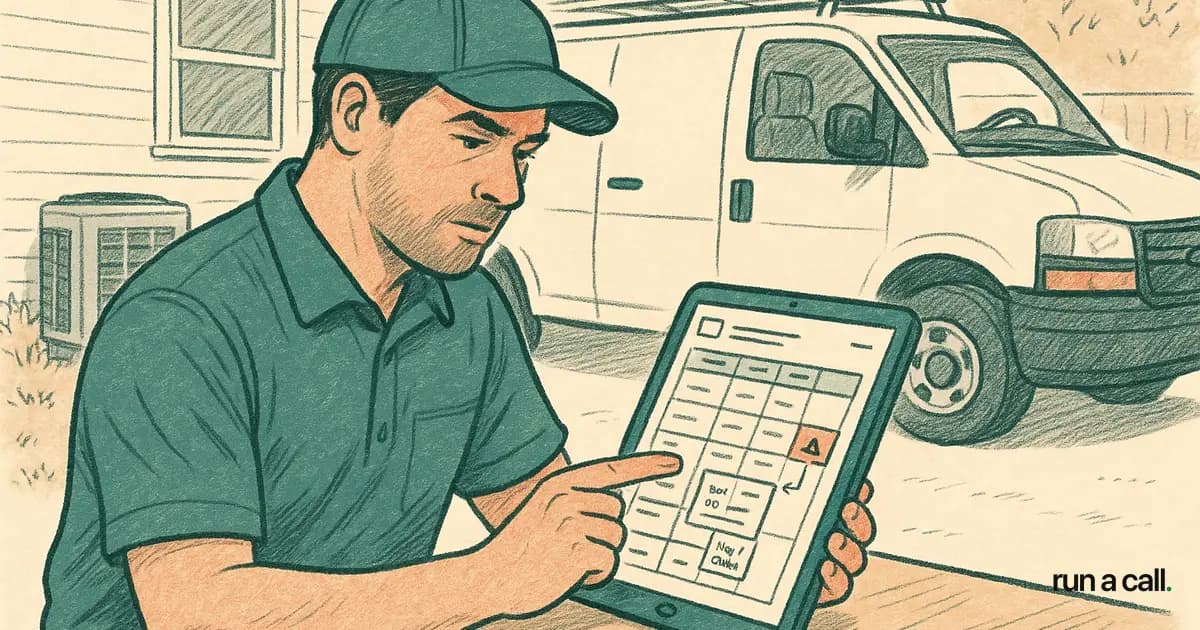
Most residential HVAC shops track callback rate as callbacks ÷ total completed jobs over a rolling 30-day period. A rate under 3% is generally considered healthy; anything above 5% signals a systemic problem — bad truck stock, undertrained techs, or a pricebook that pressures techs to quote the cheapest fix instead of the right one.
Callbacks are expensive in ways that don't show up neatly on a P&L. The direct cost is one free truck roll — figure $80–$120 in loaded labor plus fuel. The hidden cost is the customer who doesn't renew their SPP, leaves a one-star review, and tells three neighbors. Operators who've run the math find that a single callback on a $350 capacitor swap can wipe out the margin on two or three similar calls.
The strongest lever against high callback rates is a flat-rate pricebook paired with a Good-Better-Best presentation at the kitchen table. When techs sell the right repair — not the cheapest one — callbacks drop because the underlying problem is actually fixed. Shops that move from time-and-material to flat rate pricing typically see callback rates fall alongside rising average tickets, because the incentive to cut corners disappears when the price is fixed upfront.
Callback rate also surfaces technician-level performance gaps fast. Pull callbacks by tech each month and you'll see who needs a ride-along before they need a write-up. Most dispatch software can tag callbacks automatically if the job is linked to the original work order — but that linkage only works if your dispatcher closes the loop in the system instead of handling it verbally over the radio.
Frequently asked
What is a good callback rate for an HVAC shop?
Most operators aim for under 3% on a rolling 30-day window. Above 5% is a red flag worth investigating by tech, by equipment type, and by job category. Mini-split installs and refrigerant calls tend to generate higher callbacks than straightforward capacitor or contactor replacements — so benchmark within job type, not just shop-wide.
Do callbacks count against a technician's pay?
Policies vary, but many shops running flat-rate comp plans dock the callback labor from the tech's billable hours for that pay period rather than issuing a formal penalty. The key is consistency — if callbacks are sometimes absorbed quietly and sometimes charged back, techs stop trusting the system. Write the policy down and apply it the same way every time.
How does software help reduce callback rate?
The biggest help is automatic job linkage: when a customer calls back within 30 days, the dispatcher sees the original work order, the tech who ran it, and the parts used — before rolling a truck. That context lets you decide if it's a true callback or a new failure. Run a Call tags potential callbacks on the dispatch board so nothing slips through as a fresh billable call when it should be a warranty roll.