
Good-Better-Best
A tiered pricing presentation method where technicians show customers three options — a base repair or install, a mid-tier upgrade, and a premium choice — at the kitchen table or point-of-sale, increasing average ticket and close rate by anchoring buyers on value rather than cost.
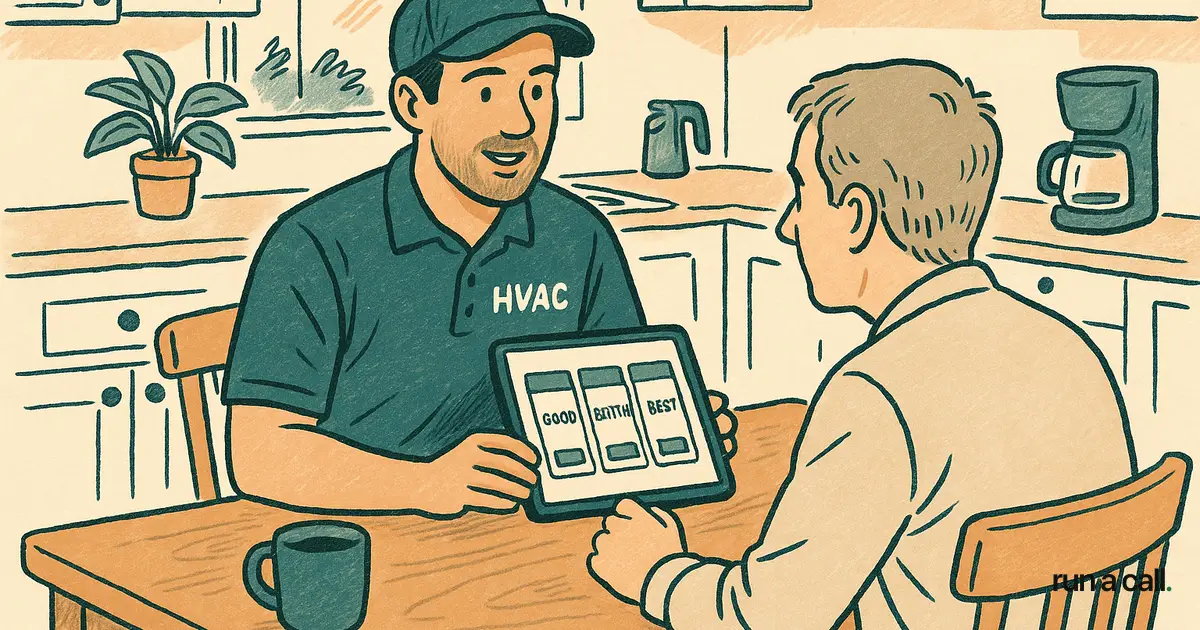
$200 repairs become $600 change-outs when a tech walks in with three options instead of one. Good-Better-Best (GBB) is a structured sales presentation built into your pricebook: Good covers the minimum fix (swap the capacitor, get the system running), Better adds a repair-plus or efficiency upgrade, and Best presents the full system change-out or IAQ bundle. Customers self-select — and about 60–70% of the time they don't choose the cheapest option.
The method only works if your pricebook is built for it. Each GBB tier needs pre-built line items, bundled labor, and a total price — not a quote the tech assembles in the driveway. Tools like flat rate pricing make this practical in the field: the tech presents a laminated card or a tablet screen, not a legal pad. Shops that bolt GBB onto a time-and-materials structure almost always see techs revert to quoting parts-only because the math gets too complicated under pressure.
Dispatchers and comfort advisors both use GBB differently. A tech running a tune-up call uses it to present repair options on a 10-year-old RTU. A comfort advisor on a change-out ride-along uses it to tier system capacity, efficiency ratings, and add-ons like air handlers or UV IAQ systems. The script is the same; the line items are different. Training a new tech on GBB presentation is typically a two-ride-along process — one to watch, one to present with a manager listening.
Average ticket lift from a properly implemented GBB pricebook runs $150–$400 per call, depending on the call type and market. The number that matters more is close rate: shops report close rates climbing from the low 40s to 55–65% after full GBB rollout, because customers feel in control of the decision rather than handed a single take-it-or-leave-it price.
Frequently asked
How many tiers should a Good-Better-Best presentation have?
Three is the standard — and research on consumer choice consistently shows that four or more options increases decision paralysis and drops close rates. Good covers the baseline fix, Better adds a meaningful upgrade (efficiency, warranty extension, parts bundle), and Best presents the full solution. If you're tempted to add a fourth tier, turn it into a separate add-on line item instead.
Can a tech run GBB without a structured pricebook?
Technically yes, practically no. Without pre-built bundles and fixed prices, the tech is doing math on a hot rooftop and usually undersells to avoid the awkward moment of getting the numbers wrong at the kitchen table. A flat rate pricebook with pre-assembled GBB tiers is what makes the presentation repeatable and trainable across a 5–25 tech shop.
Does Good-Better-Best work on every call type?
Not every call has a natural three-tier spread. A refrigerant-only top-off on a newer system may only have one right answer. GBB works best on repair-vs-replace decisions, IAQ add-ons, maintenance agreements, and system change-outs. Forcing three options onto a simple capacitor swap wastes the customer's time and teaches techs to treat GBB as a script rather than a tool.