ServiceTitan Reviews: What HVAC Owners Actually Say.

The BBB shows a 1-out-of-5 star rating for ServiceTitan, with complaints centered on billing disputes, locked-in contracts, and an onboarding process that drags six months to a year before a shop is fully functional. That number isn't cherry-picked — it tracks with what owners tell us on discovery calls: "We paid $40,000 to get out. I still don't know if we were using it right when we left." This isn't a hit piece. ServiceTitan is a real product that works for certain shops. But if you're reading reviews right now, you're probably asking a specific question: is it worth what I'm paying, and what does it actually cost to leave? This article answers both — with numbers, not opinions.
What the Aggregate Review Data Actually Shows
ServiceTitan's BBB rating is 1/5 with a pattern of complaints that cluster around three themes: unexpected charges, difficulty canceling, and onboarding that never quite finished. Google Play rates the mobile app at 2.6/5. Capterra and G2 skew higher — mid-to-high 4s — but those reviews draw disproportionately from larger commercial operations that have full-time admins managing the software.
For residential HVAC shops with 5-25 techs, the feedback splits sharply. Shops with a dedicated office manager who can absorb the learning curve tend to land in the 4-star range. Owner-operators running lean — a dispatcher, a CSR, maybe a part-time admin — hit the wall at setup and never recover full confidence in the system.
The honest read: ServiceTitan is feature-rich. It's also built for a shop that can staff around its complexity. If you're not that shop yet, the reviews from your peer group tell a different story than the headline rating.

ServiceTitan Pricing: What Shops With 5-25 Techs Actually Pay
ServiceTitan doesn't publish prices, which is its own red flag. Based on Capterra disclosures and operator-reported figures, pricing runs $245-$500 per technician per month. A 10-tech residential shop lands at $2,450-$5,000/mo in licensing alone — before setup fees that run $5,000-$50,000 depending on the implementation package.
The pricebook setup is its own line item. About 42% of ServiceTitan shops never complete pricebook configuration, according to implementation data cited in the field. That's not a knock on the operators — it's a structural problem. The tool asks you to build a pricebook before you've learned the tool, and the onboarding team moves on before the data is clean.
For comparison, Run a Call runs one flat monthly price per shop for up to 25 techs. No per-seat pricing. No setup fee. That's not a pitch — it's context for evaluating whether what you're paying is proportional to what you're getting.
ServiceTitan Contract Terms: The Clauses That Surprise Owners
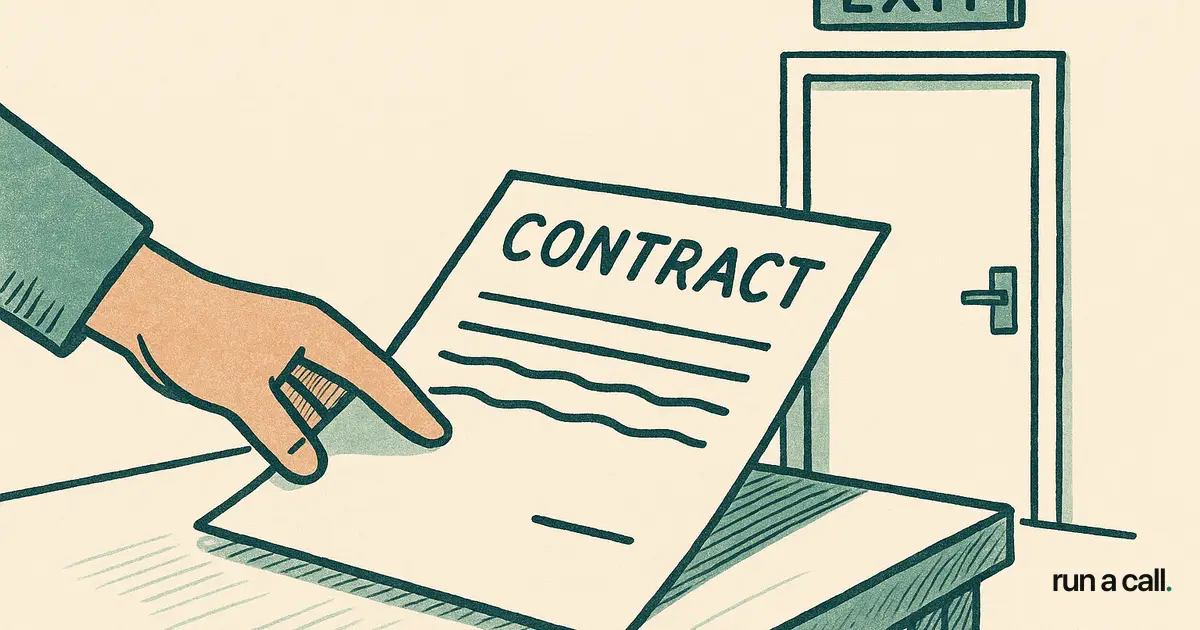
Most owners sign a one-year or three-year contract at close. The three-year deal usually comes with a lower per-seat rate, which is how the sales rep justifies it. What the kitchen-table conversation doesn't cover is the auto-renewal clause: if you don't submit written cancellation notice 60-90 days before your anniversary date, you're in for another full term.
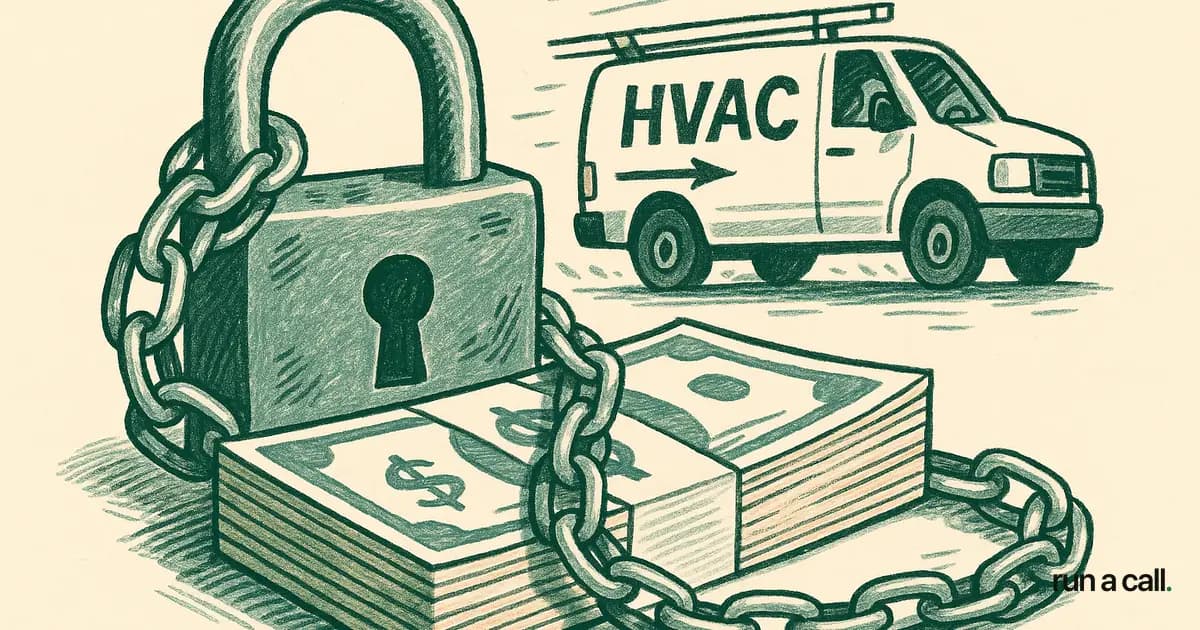
The early termination fee is calculated as the remaining monthly payments due on the contract. On a three-year deal at $4,000/mo with 12 months left, that's a $48,000 ETF — in the range of the $39,000-$46,000 figures documented in BBB complaints. ServiceTitan has enforced these in collections. That's not a rumor — it's in the filings.
If you're doing a ServiceTitan contract review right now, pull the termination section and the auto-renewal clause before you look at anything else. If your anniversary is inside 90 days, you may need to move immediately or wait out another term. Our full breakdown of the legal mechanics is in ServiceTitan Contract Review: What You're Actually Signing.
Onboarding Reality: Why 6-12 Months Is the Norm, Not the Exception
Sales reps quote 30-60 days to go live. The actual median onboarding window is 6-12 months, based on Capterra reviews and BBB complaint timelines. The gap isn't dishonesty — it's that "go live" and "fully functional" mean different things. You can technically dispatch jobs in week four. You won't have a clean pricebook, accurate reporting, or confident techs on the mobile app for months after that.
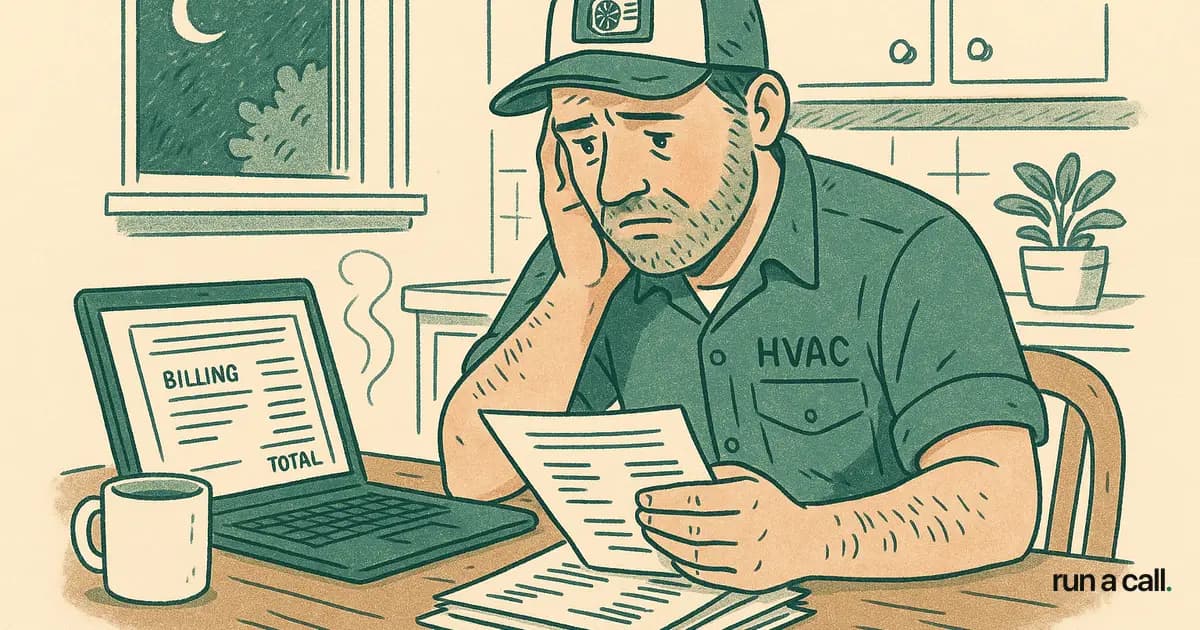
My dad's shop ran a clunky scheduling board for years because the software he tried felt like it needed its own employee to manage. That's still the complaint pattern in 2026. Owners describe spending 10-15 hours a week in the first three months just managing the software, not the business. One owner put it plainly on a Capterra thread: "The onboarding team hands you off and you're on your own before you're ready."
The operational hit is real. Dispatchers who are mid-learning-curve make more mistakes. Callbacks go up. Techs call the office more because they don't trust the app. The 188-minute average downtime per outage event documented in BBB filings doesn't help — and ServiceTitan averages roughly 2.9 outage events per month.
Is ServiceTitan Worth It? How to Answer That for Your Shop
ServiceTitan is worth it if you run a multi-trade commercial operation with 30+ techs, a dedicated admin, and the budget to staff around its complexity. For that shop, the reporting depth, the integrations, and the customization justify the price.
For a residential HVAC shop running 5-25 techs, the calculus is different. You need dispatch that doesn't require a PhD to configure, a pricebook your techs can actually use at the kitchen table, and software that doesn't eat your dispatcher's entire morning. The question isn't "is ServiceTitan good?" — it's "is it the right size for what I run?"
The honest answer for most shops in our range: you're paying for capability you'll never use, and you're absorbing complexity that costs you in hidden labor hours. If you're on month 18 of a 36-month contract and still not confident in the system, that's your answer.
How to Leave ServiceTitan Without Getting Burned
The exit process has three hard steps: confirm your contract anniversary date, calculate your ETF exposure, and start your data export before you cancel — not after. ServiceTitan can restrict data access once notice is submitted, and HVAC customer history (equipment, install dates, service records) is worth protecting.
The ETF is the biggest shock. If you're mid-contract, you have two options: pay it and move, or negotiate. ServiceTitan has settled ETFs below the contract amount in documented cases, particularly when the shop can show documented onboarding failures or extended outage periods. It's worth a conversation before you write the check.
For the full step-by-step process — notice windows, data export checklist, negotiation script — read our guide on how to leave ServiceTitan. If you're close to your anniversary and thinking about switching, the window to act is shorter than you think.
Frequently asked
What is ServiceTitan's BBB rating?
ServiceTitan holds a [1-out-of-5 star rating on the BBB](https://www.bbb.org/us/ca/glendale/profile/project-management-software/servicetitan-inc-1216-1290182) as of 2026. Complaints center on billing disputes, early termination fee enforcement, and onboarding that didn't deliver what was promised. The BBB rating reflects residential and small commercial operators disproportionately — larger shops tend to route complaints through their account management teams rather than public filings.
How much does it cost to cancel ServiceTitan early?
The ServiceTitan ETF equals the remaining monthly payments on your contract. Documented cases show ETFs in the [$39,000-$46,000 range](https://www.bbb.org/us/ca/glendale/profile/project-management-software/servicetitan-inc-1216-1290182) for shops exiting a three-year deal with one year remaining. ServiceTitan has enforced these fees in collections, though negotiated settlements below the contract figure have also been documented. Pull your termination clause before you submit any notice.
How long does ServiceTitan onboarding actually take?
The realistic range is 6-12 months before a residential HVAC shop operates confidently in ServiceTitan, based on [Capterra reviews](https://www.capterra.com/p/150053/ServiceTitan/) and BBB complaint timelines. Sales teams quote 30-60 days to "go live," which typically means dispatching jobs — not running clean reports, completing pricebook setup, or having field techs who trust the mobile app.
Does ServiceTitan auto-renew contracts?
Yes. ServiceTitan contracts include an auto-renewal clause that typically requires written cancellation notice 60-90 days before the contract anniversary. If you miss that window, you're committed to another full term at the same rate. Check your contract's termination section for the exact notice window — it varies by agreement.
What is a good ServiceTitan alternative for a 5-25 tech HVAC shop?
For residential HVAC shops in the 5-25 tech range, options worth evaluating include Housecall Pro, FieldEdge, Service Fusion, Jobber, and Run a Call. Run a Call runs at one flat monthly price per shop with no per-seat pricing and no setup fee, built specifically for this size shop. You can [walk through Run a Call](/servicetitan-alternative) to see if the dispatch model and pricebook approach fit how you operate.
Ready to switch HVAC software?
Walk through the dispatch board, pricebook, and mobile app in 30 minutes. No commitment.

Co-founder of run a call. Owns product and operations. AI Strategist; built and sold an AI process-automation firm; before that ran transformation programs at HP.
Read full bio →