
Pricebook
A pricebook is a structured catalog of flat-rate prices for every service, repair, and part a residential HVAC shop sells — used by technicians at the kitchen table to quote and close jobs without calling the office for a number.
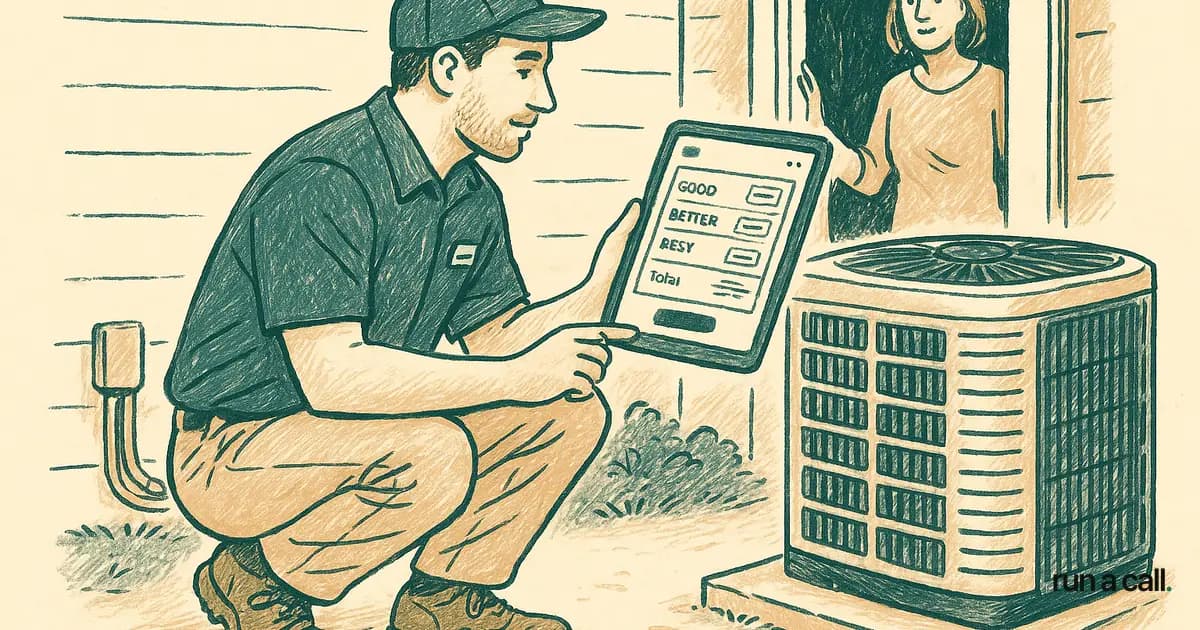
42% of shops that start a pricebook never finish it — and the reason is almost always structure, not data. Most operators try to build their pricebook as a parts list with markups. That's the wrong model. A residential HVAC pricebook organizes work into tasks (capacitor replacement, TXV swap, R-410A recharge per pound, full system change-out) with labor baked in, so the tech presents one number, not a parts-and-labor worksheet. The structure has to come first. The prices fill in after.
A working pricebook directly drives average ticket and close rate. When a tech can flip to "blower motor replacement — $485" without doing mental math in front of a homeowner, he closes more. When every tech quotes the same number for the same job, callbacks drop and warranty disputes disappear. Shops running flat-rate books consistently hit $450–$600 average service tickets; shops still quoting time-and-material average $300–$380 on the same call types, because the tech discounts under pressure.
The two most common failure modes: (1) building a pricebook in a spreadsheet that never makes it into the field software, and (2) importing a generic pricebook template that doesn't match the shop's actual truck stock or local labor cost. ServiceTitan's pricebook module has a documented 42% setup-failure rate — shops get partway through the 6-12 month onboarding and run out of steam before the book is live. The structure is the blocker, not the willingness. If a tech is still quoting off memory six months into a software rollout, the pricebook didn't ship.
In Run a Call, the pricebook is pre-structured around residential HVAC task categories so a 10-tech shop can go from zero to quoting in days, not quarters. Techs present flat-rate prices on the job; the office sees every line item without a phone call. That's the whole point.
Frequently asked
What is the difference between a pricebook and a parts list?
A parts list shows what something costs the shop. A pricebook shows what the shop charges a homeowner — with labor, overhead, and margin already baked into a single flat-rate number. A tech uses a pricebook at the kitchen table; a parts list never leaves the warehouse.
How many line items does a residential HVAC pricebook need?
A functional residential service pricebook typically needs 80–150 task-level line items covering diagnostics, common repairs (capacitors, contactors, motors, TXV, metering devices), refrigerant by pound, IAQ add-ons, maintenance agreements, and change-out configurations (single system, dual system, mini-split). Shops that try to build 1,000+ SKUs on day one almost never finish. Start with the 20 jobs that make up 80% of your call volume and add from there.
Does a pricebook raise prices for customers?
Not necessarily — but it does stop techs from discounting under pressure. Most shops discover their time-and-material average ticket was artificially low because techs were rounding down in front of homeowners. A flat-rate pricebook sets a consistent floor. If your prices are calibrated correctly for local labor cost and a 30–35% gross margin target, the number the homeowner sees is fair and the shop actually makes money on the call.