HVAC Dispatcher Training Manual: Build One That Sticks.
Most HVAC shops lose their best dispatcher exactly once before they realize the job was never documented. One resignation and suddenly the 8am board looks like a puzzle with missing pieces — which tech goes where, who covers the same-day surge, and why Mrs. Thompson always gets routed to Mike. That knowledge walked out the door. A dispatcher training manual fixes that. It captures your shop's decision logic — routing rules, callback protocols, tech skill tiers, the 8am rush sequence — so any dispatcher you hire can run your board at 80% capacity by the end of week two, not week twelve.
What Should an HVAC Dispatcher Training Manual Cover?
An HVAC dispatcher training manual should cover six core areas: the daily open sequence, tech skill tiers, routing rules, call-type priorities, customer communication standards, and callback handling. That's the full loop from board-open to job-closed.
Most manuals I've seen at shops our size — 5 to 25 techs — stop at the daily open sequence and never get to routing logic. That's the expensive gap. Routing logic is where your close rate, average ticket, and callback rate live.
Start by writing down what your best dispatcher already does. Shadow them for two full shifts. Ask them to narrate every decision out loud: why did they bump that maintenance call, why did they send Miguel to the RTU job instead of the mini-split call three streets over. Transcribe it. That transcript is the first draft of your manual.
The 8am Rush: Script Every Minute of Your Highest-Stakes Hour
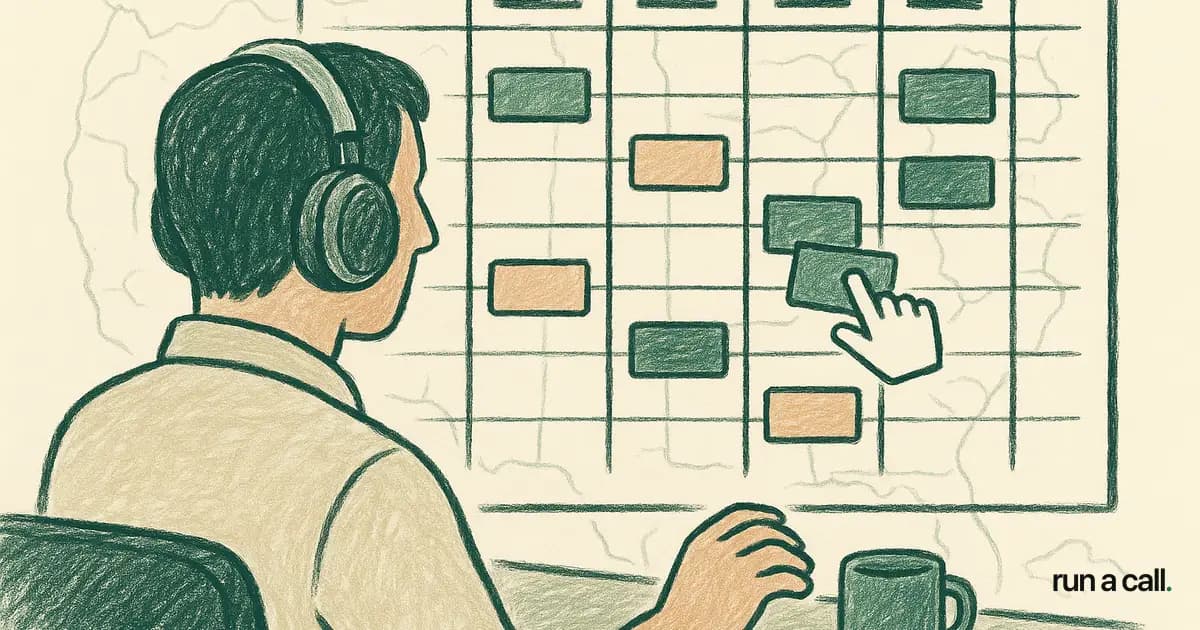
The 8am-to-9am window is the highest-leverage hour of the day for most residential HVAC shops. CSRs are booking overnight call-backs, techs are checking in before first drive, and parts pulls for same-day change-outs are already piling up. When that hour runs on gut feel, you lose 30-50% of same-day capacity to sequencing errors.
Your manual needs a literal minute-by-minute script for that hour. At 8:00, the dispatcher opens the board and confirms all overnight bookings are slotted. At 8:10, they run down the tech roster — who's on, who's out, any ride-alongs scheduled. At 8:20, parts run coordination with the warehouse or supply house. At 8:30, the first dispatch calls go out.
That sequence sounds obvious. But without it written down, a new dispatcher defaults to answering inbound calls first — and by 9:15, the board is scrambled, two techs are waiting for assignments in their driveways, and your CSR is getting yelled at by the 10am customer who just got bumped.
Tech Skill Tiers and Routing Rules
Skill-tier routing is the piece most manuals skip, and it's the piece that directly determines your average ticket and callback rate. A dispatcher who doesn't know that your apprentice can handle a capacitor swap but not a refrigerant charge on an R-410A system will route wrong — and you'll get callbacks.
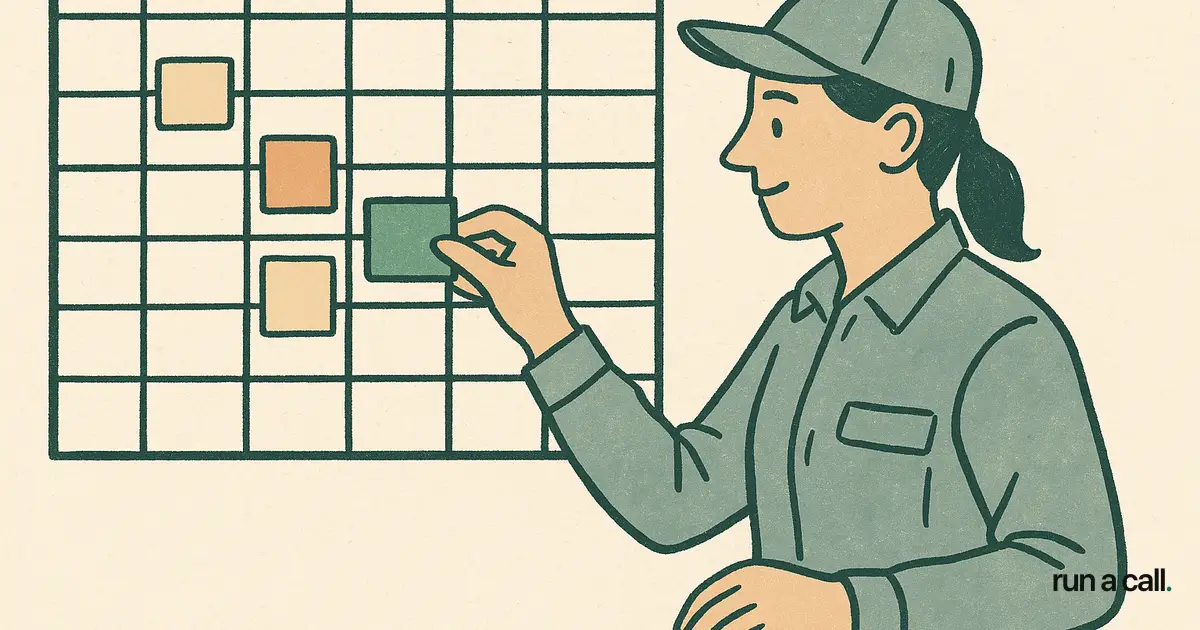
Build a simple three-tier grid: Tier 1 (apprentice — tune-ups, filter swaps, capacitor replacements, basic IAQ installs), Tier 2 (journeyman — full diagnostics, refrigerant work, A2L transitions, SPP upsells), Tier 3 (senior/comfort advisor — change-outs, system replacements, kitchen-table closes). Every tech on your roster maps to a tier. Every call type maps to a required tier. The dispatcher's job is matching them.
Document the customer-favorite-tech rule explicitly. When a customer has had the same tech for two or more visits, route them back to that tech if scheduling allows. Industry aggregate data puts the close-rate lift from that rule at 8-15% on repeat service calls. That's not a preference — it's a revenue decision. Put it in the manual with that framing so dispatchers don't override it to save 12 minutes of drive time.
Callback Protocols: Your Dispatch Quality Meter
Callback rate is the strongest leading indicator of dispatch quality — not revenue, not average ticket. Shops with a 30-day callback rate below 5% retain customers 3-5 times longer than shops running at 10% or above. That number belongs in your manual as a standing KPI, visible to every dispatcher every week.
Your manual needs a callback protocol with three steps: identify, root-cause, reroute. When a callback comes in, the dispatcher flags it before assigning it — don't just slot it like a normal call. The root-cause question is: was this a parts failure, a diagnostic miss, or a dispatch error (wrong tech tier for the job)? Log the answer. After 30 callbacks, you'll see patterns. Patterns tell you where your skill-tier grid needs adjusting.
The reroute rule is simple: the same tech who did the original job handles the callback, same-day or next morning, at no charge to the customer. That's your trust recovery move. A different tech showing up suggests the first tech failed, and customers notice. Put the rule in writing so dispatchers don't improvise.
Dispatch Software Requirements: What to Document Before You Buy
Before you pick hvac dispatch software, write down what your manual requires from the board. Most shops buy software first and try to fit their process into it — that's backwards. Your routing rules, skill-tier grid, and callback protocols should drive the software decision.
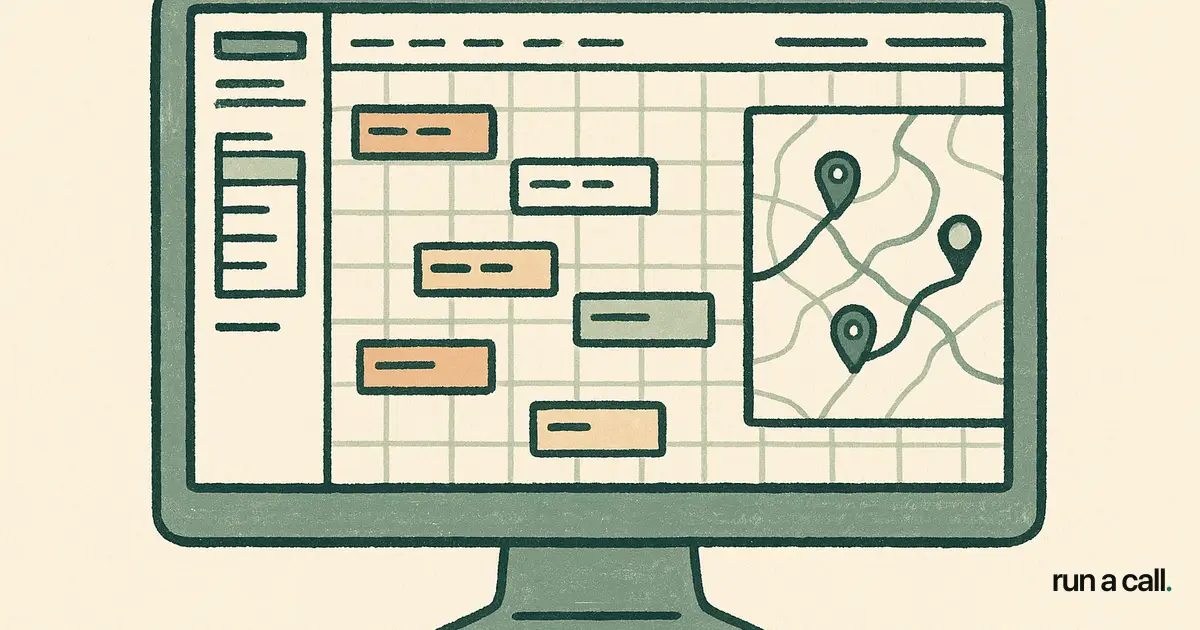
The board must support drag-and-drop rescheduling without a page reload. When a tech calls out sick at 7:45am, your dispatcher has 10 minutes to redistribute eight calls. If that means clicking through three screens per reassignment, they'll make mistakes. A drag-and-drop dispatch board that shows tech availability, skill tier, and drive time in a single view cuts that redistribution from 15 minutes to three.
Reliability matters more than features. Shops running 12-22 calls per day per tech cannot absorb an outage during the morning rush. When evaluating any tool — Housecall Pro, FieldEdge, Service Fusion, or others — ask for their documented uptime history before you commit. That answer tells you a lot about how seriously they treat dispatch as a mission-critical function.
How to Train a New Dispatcher With the Manual
A manual no one uses is just a PDF on a shared drive. Training is what activates it. Structure your new dispatcher onboarding as four stages: read, shadow, call, solo.
Read is two hours on day one — they study the manual top to bottom and write down every question. Shadow is days two through four — they sit next to your current dispatcher and narrate what they see against what the manual says. Call is day five — they run the board with your dispatcher watching, making real dispatch decisions. Solo is week two — they run the board independently, with a daily 15-minute debrief with you or your lead dispatcher to flag any deviations from the manual.
At the end of week two, the new dispatcher should document one thing the manual got wrong or missed. That's not a critique — it's how the manual improves. The best shops I've talked to treat their dispatcher training manual as a living document, reviewed quarterly and updated when callback patterns shift or when a new call type (A2L transition work, IAQ package upsells) gets added to the board. If you're evaluating a ServiceTitan alternative for HVAC or any other software change, that quarterly review is also when you align the manual's routing logic with whatever the new board supports.
Frequently asked
How long should an HVAC dispatcher training manual be?
Most shops can cover the critical content in 8-15 pages. You need: a daily open sequence (1-2 pages), tech skill-tier grid (1 page), routing rules (2-3 pages), call-type priority matrix (1 page), customer communication standards (1-2 pages), and callback protocol (1-2 pages). Longer manuals get ignored. If it can't fit in a binder a dispatcher can flip through during a slow moment, it's too long.
What is the most important section of an HVAC dispatcher training manual?
The routing rules section — specifically the tech skill-tier grid and the customer-favorite-tech rule. Those two pieces determine your close rate, average ticket, and callback rate more than any other dispatcher decision. A dispatcher who knows how to answer phones but doesn't know your routing logic will cost you more in missed upsells and callbacks than a dispatcher who does the reverse.
How do I reduce callback rates through better dispatching?
Three things: match tech skill tier to call type (never send an apprentice to a job that requires a journeyman), use the customer-favorite-tech rule on repeat visits, and log every callback with a root-cause code. Shops that track root-cause data on callbacks consistently identify two or three recurring skill mismatches — and fixing those specific routing rules typically drops callback rates below 5% within 60-90 days.
What dispatch software features should I document in a training manual?
Document how your board handles drag-and-drop rescheduling, how tech availability and skill tier are displayed, how same-day call volume gets slotted, and what the dispatcher should do if the software goes down. That last one matters — shops running 12-22 calls per day per tech need a paper-backup protocol documented in the manual so a software outage doesn't shut down the board.
How often should I update an HVAC dispatcher training manual?
Quarterly at minimum, and any time a major routing rule changes — new call type added, tech tier changes, software switch, or a spike in callback rate that reveals a gap. Assign one person (usually your lead dispatcher or ops manager) as the manual owner. They're responsible for flagging when real-world decisions are drifting from the written rules. That drift is usually the first sign the manual needs updating.
Ready to switch HVAC software?
Walk through the dispatch board, pricebook, and mobile app in 30 minutes. No commitment.

Co-founder of run a call. Owns product and operations. AI Strategist; built and sold an AI process-automation firm; before that ran transformation programs at HP.
Read full bio →