HVAC Website: What Your Site Needs to Book More Calls.
Most HVAC owners treat their website like a business card — something you print once and forget. Meanwhile, Google Local Services Ads are sending prospects to your homepage at $20-$80 a lead, and those prospects are deciding in under 10 seconds whether to book or bounce. That's not a marketing problem. That's a website problem. A well-built HVAC website does three things: it converts paid traffic into booked calls, it ranks for local service searches in your area, and it markets your membership program to every visitor who might become a $400-a-year recurring customer. If your site isn't doing all three, you're leaving money on every page.
What Makes an HVAC Website Actually Convert
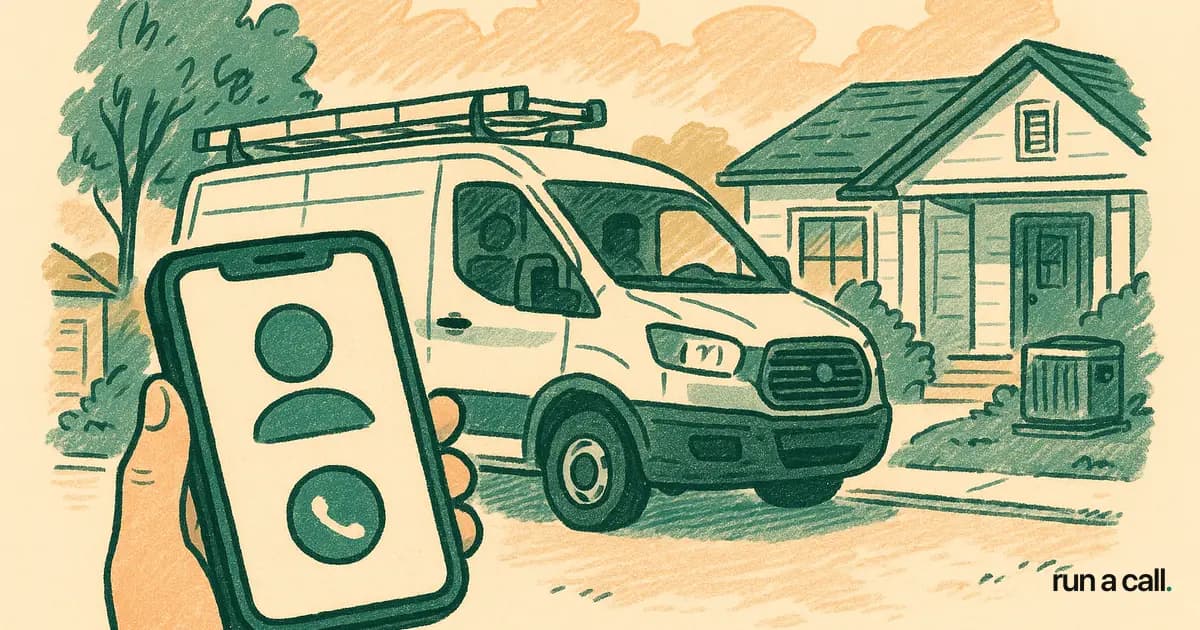
A converting HVAC website gets one thing right before anything else: the phone number is visible without scrolling, on every page, on every device. That sounds obvious. Walk through ten HVAC websites in your market right now — half of them hide the number in the footer.
Above the fold, a visitor needs to see three things: what you do, where you do it, and how to reach you. "Heating and Cooling Repair in [City] — Call Now" beats a hero slider with stock photos of smiling families. Specificity converts. Ambiguity doesn't.
Page speed is the next filter. Google's own data shows that a one-second delay in mobile load time cuts conversions by roughly 20%. HVAC prospects searching "AC repair near me" on a hot afternoon are not patient. If your site loads in five seconds, you're handing that lead to the shop across town.
How HVAC Lead Generation Channels Stack Up
Google Local Services Ads (LSAs) are the highest-ROI paid channel for a 5-25 tech residential shop in 2026. Cost per lead runs $20-$80, and the Google Guarantee badge does real conversion work — homeowners trust it. Your website still matters here because LSA clicks often land on your homepage before a prospect decides to call.
Google Ads (traditional search campaigns) run $50-$200 per lead for HVAC, which is viable if your average ticket is $400-$800 and your close rate is solid. The risk is click fraud and broad-match waste. A tightly built campaign with service-area targeting and negative keywords ("HVAC jobs", "HVAC school") is very different from a set-and-forget campaign your agency runs on autopilot.
Referral programs come in under $30 per lead and produce the highest lifetime value customers. A homeowner referred by a neighbor already trusts you. Your website's job in a referral program is to make the referral easy — a dedicated landing page with a simple form beats asking people to "mention this when you call." Direct mail still works in rural and exurban markets at $15-$60 per lead, but it sends people to your website to verify you're real before they call. Facebook paid ads consistently underperform for HVAC lead generation compared to search-intent channels — the audience is browsing, not buying.
Your Membership Program Deserves Its Own Page
Membership programs are the most under-marketed asset in residential HVAC. I've talked to dozens of owners running 50-, 100-, even 300-member SPP books who have zero mention of their membership on their homepage. The offer that doubles customer LTV and stabilizes shoulder-season revenue is buried in the navigation under "Services" if it exists at all.
A membership page needs to answer three questions immediately: What do members get? How much does it cost? How do I sign up today? Include the tune-up schedule (spring and fall visits), the priority dispatch benefit, and the discount on repairs. Homeowners respond to concrete math: "Members pay $X/year and get $Y in tune-ups plus 15% off any repair."
Even a basic email capture on the membership page — "Get notified when we open new member slots" — builds a warm list you can work during the slow season. That list is worth more than any paid ad campaign you can run in January.
HVAC SEO: What Your Site Structure Has to Get Right
SEO is a long game, but it's the only marketing channel where the leads get cheaper over time instead of more expensive. A correctly structured HVAC site compounds — a page ranking for "AC replacement [city]" in year one keeps producing calls in year three without additional spend.
For a 5-25 tech residential shop, the pages that matter most are: a homepage targeting your primary city, individual service pages for the work you actually want to win (AC repair, furnace replacement, mini-split installation, IAQ services), and location pages if you cover multiple service areas. Each page needs a distinct title tag, a header that names the service and the city, and real content that answers what a homeowner searching that term actually wants to know.
Google Business Profile is the highest-leverage local SEO move that isn't your website — but it feeds your website. Reviews, photos of real jobs, and regular posts that link back to your service pages all compound. Your GBP and your website are one system, not two separate tasks.
For deeper tactics on the full marketing mix, the hvac marketing owner's playbook covers how SEO, LSAs, and referral programs fit together across a 12-month calendar.
How Your Website and Field Software Have to Work Together
A booking form that sends leads to a shared inbox and waits for someone to call them back is a broken funnel. In 2026, homeowners filling out a contact form at 9 PM expect a confirmation — not silence until Tuesday morning when someone checks email.
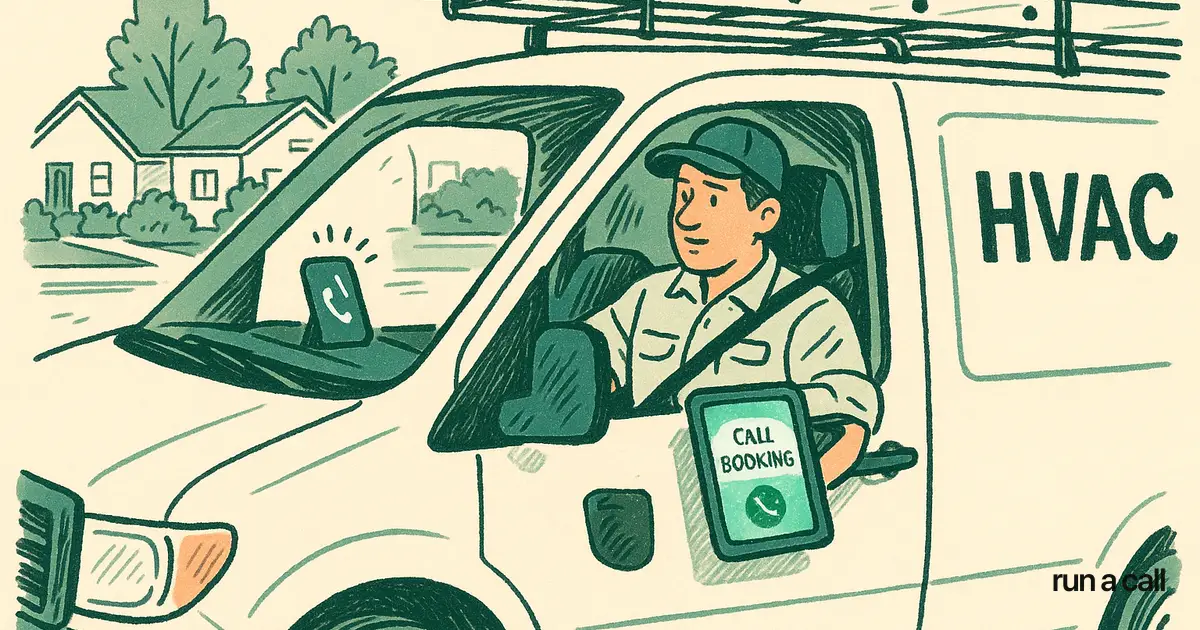
The tightest setup for a 5-25 tech shop: LSA or Google Ads sends the click, the website landing page has a booking form, the form creates a job in your field software, and the homeowner gets an immediate confirmation text. Every step has to be connected. If your website vendor and your software vendor don't talk, you're losing leads in the gap.
Run a Call is built for shops in this range — $750K to $5M revenue, 5-25 techs, residential focus. The ServiceTitan alternative for HVAC comparison is worth reading if you're running something built for a 100-tech enterprise and paying for features your shop will never use. At one flat monthly price per shop, Run a Call doesn't charge per technician, and the onboarding is measured in days, not the 6-12 months that BBB complaints about ServiceTitan document repeatedly (source).
What to Fix on Your HVAC Website This Month
If you have one hour, do these four things. First, open your site on your phone and confirm the phone number is visible without scrolling. If it isn't, fix it today — that's a conversion killer on every LSA click you're paying for. Second, run your homepage through Google PageSpeed Insights (it's free) and look at your mobile score. Below 70 is a problem worth paying a developer to fix.
Third, search for your business name and look at what shows up before your own website — Google Business Profile, Yelp, local directories. If your GBP doesn't have 20+ reviews, a complete services list, and photos of actual jobs, that's your next hour. Fourth, find where your membership program lives on your site. If it's not in the main navigation with its own dedicated page, move it there this week.
For HVAC Google Ads specifically, the HVAC Google Ads shop owner's guide goes deep on campaign structure, negative keywords, and what a good cost-per-booked-call actually looks like for a residential shop.
Frequently asked
How much does a good HVAC website cost to build?
A functional, converting HVAC website built on WordPress or a similar CMS runs $2,000–$6,000 from a competent local web developer in 2026. Template-based builds (Squarespace, Wix) can be cheaper but often load slower and give you less control over technical SEO. What you spend on the site matters less than whether it has a fast load time, clear calls to action, and proper service-area page structure. A $3,000 site that loads in under 2 seconds on mobile will outperform a $10,000 site that loads in 5 seconds.
Should HVAC companies run Google Ads or Local Services Ads?
For most 5-25 tech residential shops, start with Google Local Services Ads. Cost per lead runs $20–$80 and the Google Guarantee badge converts better than a standard text ad. Once your LSA budget is dialed in and you're tracking cost per booked call, layer in Google Ads for high-value services like equipment change-outs or mini-split installations where you can afford the $50–$200 CPL because the ticket size justifies it. Running both without tracking which one produces booked revenue — not just clicks — is how shops waste ad budget.
What pages does an HVAC website need?
At minimum: a homepage targeting your primary city, individual service pages for AC repair, furnace repair, AC installation, furnace installation, and any specialty services (mini-splits, IAQ, RTU work), a membership/service plan page, an About page with real photos of your team and trucks, and a Contact/Book page with a form that actually routes into your scheduling system. If you serve multiple cities, add location-specific pages for each major service area. Each page should have a unique title tag and answer the specific question a homeowner in that city searching that service would have.
How do HVAC membership programs work as a marketing tool?
A membership program — sometimes called an SPP (service protection plan) or maintenance agreement — charges homeowners a flat annual or monthly fee for two tune-ups per year plus benefits like priority dispatch and repair discounts. As a marketing tool, memberships double customer lifetime value compared to one-time-service customers and stabilize shoulder-season revenue when installs slow down. The marketing job is simple: put the offer in front of every customer you touch. That means a page on your website, a mention on every invoice, and a follow-up after every service call. Most shops that have memberships under-market them — the offer sells itself once homeowners understand the math.
How long does HVAC SEO take to produce leads?
Realistically, 6–12 months before organic search produces a meaningful volume of leads for a new or freshly optimized HVAC site. Competitive markets with established players take longer. The compounding effect is real though — a page ranking for 'AC replacement [city]' in month 8 keeps producing calls in year 3 without additional spend. Run LSAs and Google Ads while your SEO builds. Don't pause paid traffic waiting for organic to catch up, but don't skip SEO because paid is working now.
Ready to switch HVAC software?
Walk through the dispatch board, pricebook, and mobile app in 30 minutes. No commitment.

Co-founder of run a call. Owns product and operations. AI Strategist; built and sold an AI process-automation firm; before that ran transformation programs at HP.
Read full bio →