Customer Favorite Tech Dispatch: How to Route Smarter and Close More.
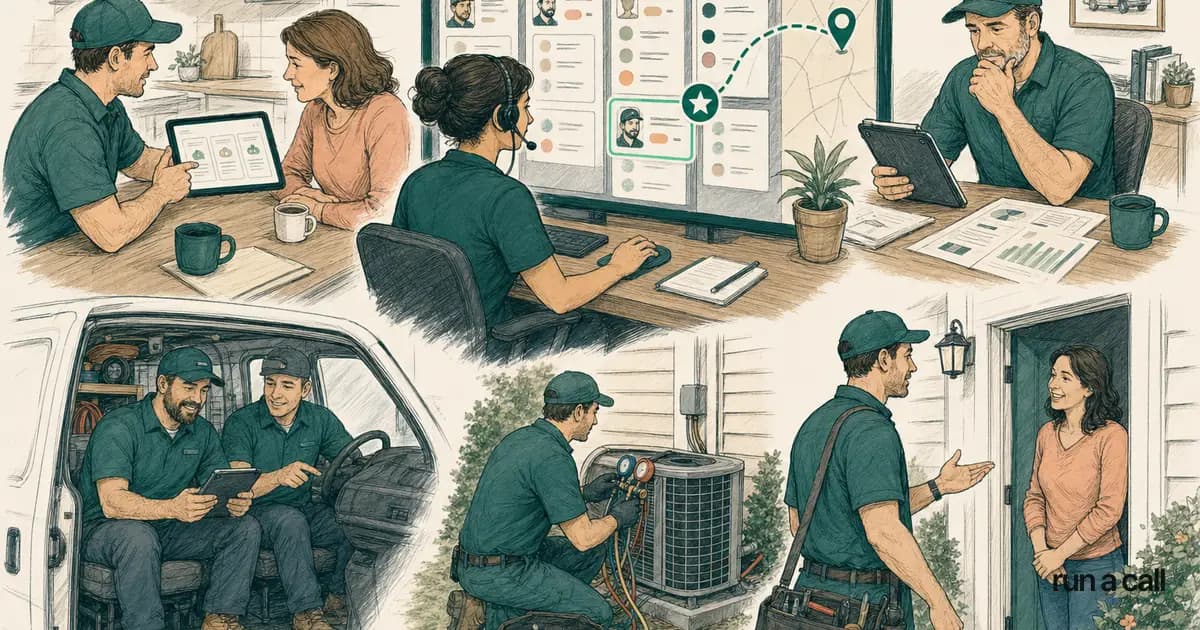
An 8-15% lift in close rate on repeat service calls — that is what consistently routing a customer to the same tech who served them last is worth, according to industry-aggregate data. Most residential HVAC shops with 5-25 techs running 12-22 calls a day per truck leave that money on the table because their dispatch board doesn't surface the history fast enough during the 8am rush. Customer favorite tech dispatch is not a soft, feel-good rule. It is a documented revenue lever: when a customer already trusts the tech standing at their kitchen table, the change-out conversation is shorter, the close rate is higher, and the callback rate drops. This article breaks down how to build the rule into your dispatch process, what to look for in HVAC dispatch software that actually supports it, and how to stop losing the match during your highest-leverage hour of the day.
Why Customer Favorite Tech Dispatch Moves the Needle
The close rate lift from matching a repeat customer to their previous tech is 8-15%, based on industry-aggregate data across residential HVAC shops. That range isn't random — it reflects the difference between a tech walking into a home cold versus walking in already trusted.
My dad's shop ran this rule manually for years. The dispatcher kept a paper card file — customer name, last tech, last date. It worked until the shop hit 12 techs and 18 calls a day. Then the card file became a liability: calls got routed wrong, techs showed up to customers who expected someone else, and close rate on those repeat calls dropped noticeably.
The rule itself is simple. The execution is where most shops break down. You need the match to happen in seconds, during the booking call, before the job even hits the board.
The 8am Rush: Your Highest-Leverage Dispatch Hour
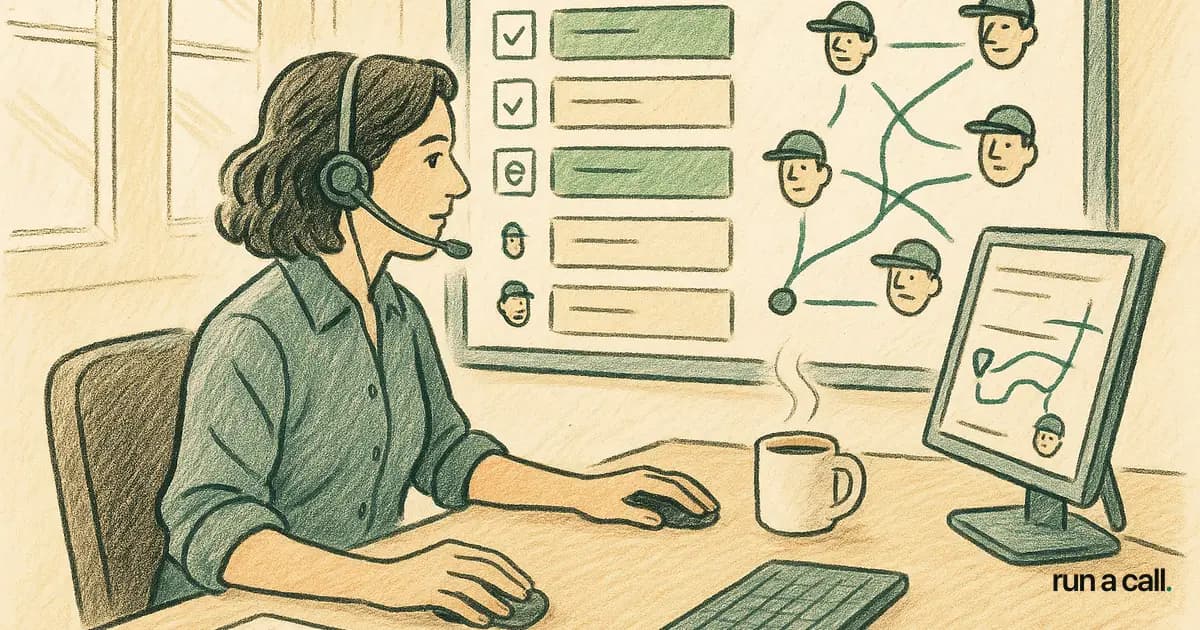
From roughly 8am to 9am, three things collide in most residential HVAC shops: CSRs are booking same-day calls (30-50% of daily volume arrives same-day), techs are checking in and pulling truck stock, and the dispatcher is trying to load-balance a board that is already half-committed from the day before.
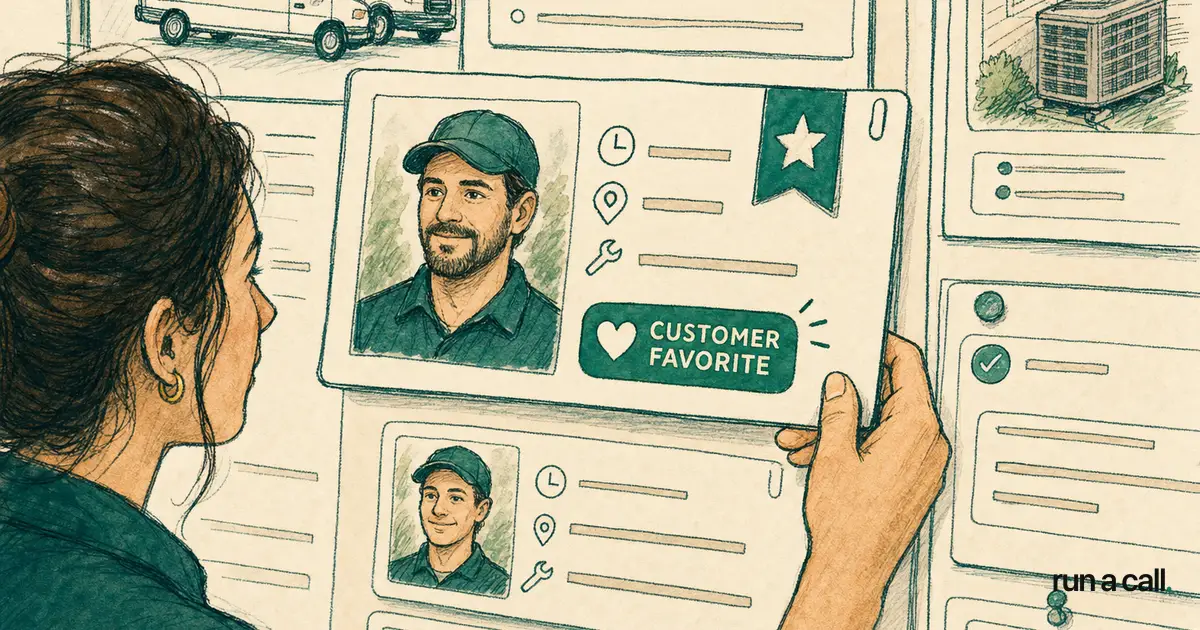
That is the hour where customer-favorite matching either happens or doesn't. If your hvac dispatch software doesn't surface 'Mrs. Johnson last had Tech 7 — Marcus' the moment the call is booked, your dispatcher is doing a manual search while three other calls are ringing.
Shops that build a formal morning dispatch ritual — board review at 7:45am, favorite-tech flags confirmed before 8:00am, parts pulls assigned by 8:30am — run significantly tighter than shops that wing it call by call. The 8am hour is not just busy. It is where the day's revenue trajectory is set.
What a Dispatch Board Needs to Support Favorite-Tech Routing
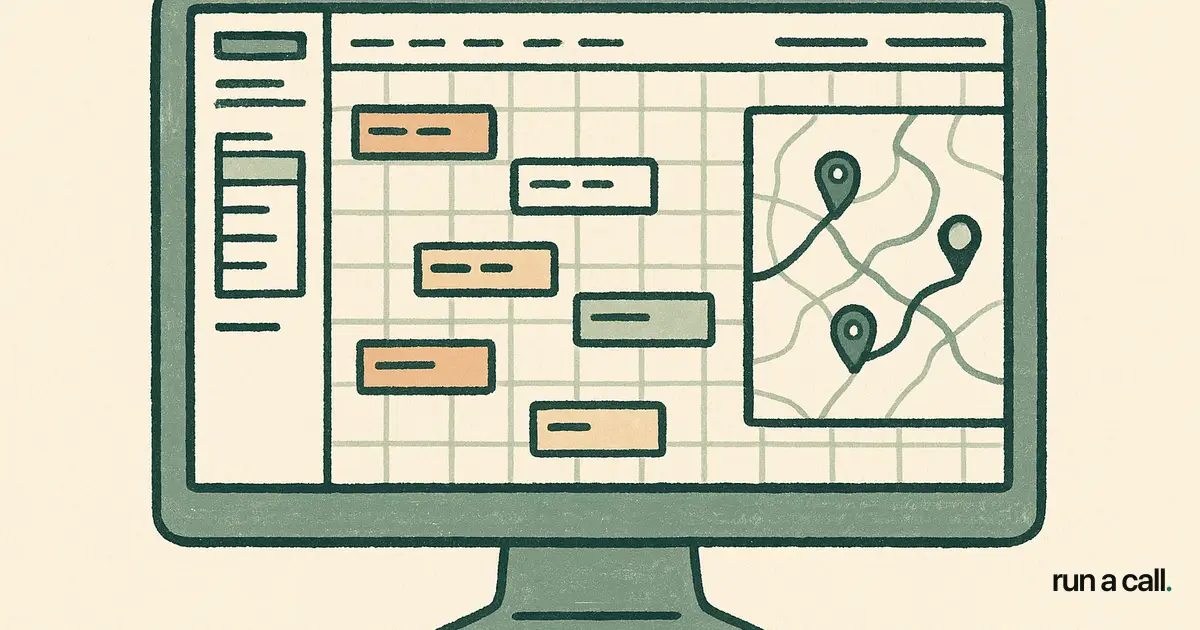
A dispatch board that supports customer favorite tech dispatch has three visible pieces of information at the job-card level: the customer's name, their service history summary (last tech, last visit date, last job type), and the current availability of that preferred tech.
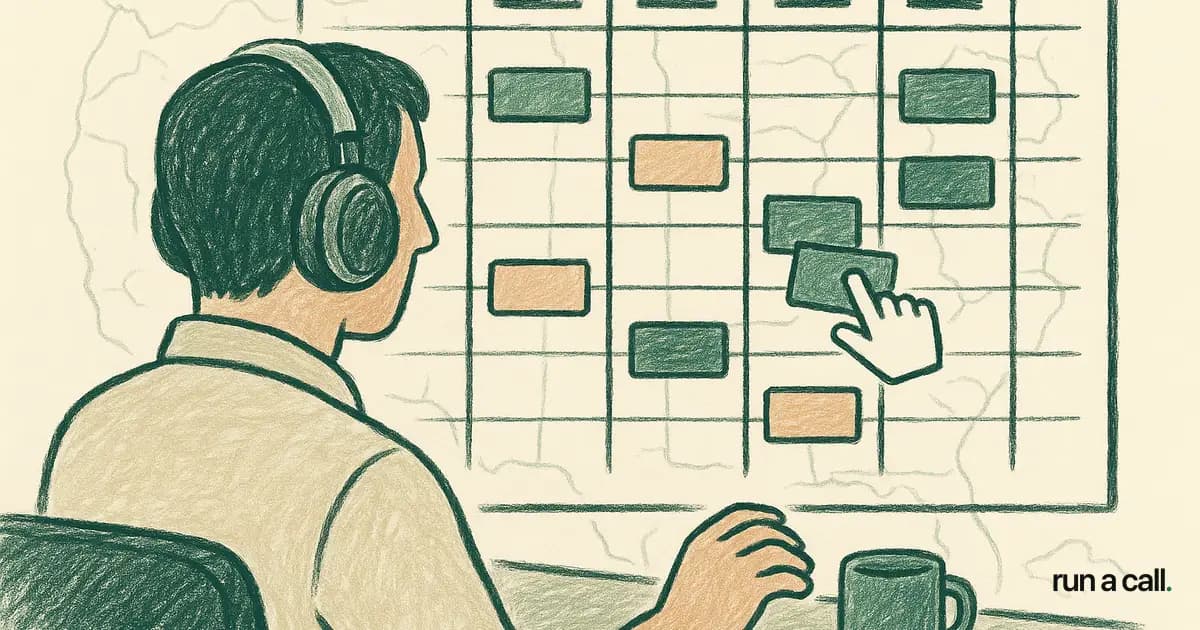
Drag-and-drop dispatch is the minimum interaction model. If your dispatcher has to open a separate customer record, scroll through history, then manually type a tech name into a job, the rule gets skipped when volume spikes. The board has to make the right move the easy move.
Explainable AI dispatch goes a step further: instead of a black-box assignment, the software shows a confidence score and a reason chip — 'Marcus: last tech for this customer, 4.2 miles away, available at 10am.' The dispatcher sees the reasoning, overrides with thumbs-down if the timing doesn't work, and the system learns. That is categorically different from a tool that just assigns without explaining.
For a deeper breakdown of what to evaluate when choosing a board, the HVAC dispatch software owner's guide covers the full feature checklist.
Callback Rate: The Scorecard for Dispatch Quality
Callback rate — the percentage of jobs that generate a return trip within 30 days — is the strongest leading indicator of dispatch quality. Shops with a sub-5% 30-day callback rate retain customers 3-5 times longer than shops running above that threshold.
Customer favorite tech dispatch directly reduces callbacks in two ways. First, a trusted tech is more likely to do a thorough diagnostic — they're not trying to prove themselves, they're maintaining a relationship. Second, the customer is more likely to share the full picture of what's been wrong, which leads to a more accurate repair.
Track callback rate by tech and by dispatch assignment. If callbacks are concentrated on calls where the favorite-tech match was skipped, that's your signal — the rule is working, you just need to enforce it more consistently. Some shops post the tech-level callback rate on a whiteboard in the shop. It changes behavior fast.
Building the Favorite-Tech Rule Into Your Dispatcher Training
A dispatcher training manual that doesn't include the customer-favorite-tech rule is missing one of the highest-ROI habits you can standardize. The rule should be written as a standing order, not a suggestion: 'Check customer history before assigning any repeat caller. If their preferred tech is available within 2 hours of the requested window, assign them.'
Define the override conditions explicitly. Preferred tech is out sick: assign the closest tech by skill match and note it in the job. Preferred tech is already at capacity: offer the customer a specific time window when their tech is available, or explain the alternative. These aren't edge cases — they happen daily at 12-22 calls per tech per day.
For a full framework on building dispatcher habits that hold under volume, see the HVAC dispatcher training manual guide. The favorite-tech rule is one of seven practices that separate tight shops from chaotic ones — and it's the easiest to enforce when your software makes the history visible.
Choosing Software That Doesn't Break the Rule Under Load
Dispatch software reliability matters more than most owners realize until they've had it fail during a heat emergency. If your board goes down for the 188-minute average outage that some tools average, you're not just losing efficiency — you're losing the customer history that makes favorite-tech routing possible.
When evaluating HVAC dispatch software for a 5-25 tech shop, ask three questions: Does customer history surface at the job-card level without clicking into a separate record? Does the board show tech availability alongside the favorite-tech flag simultaneously? And can dispatchers override AI suggestions with a single action that feeds back into the system?
Run a Call ships explainable AI dispatch with confidence scores, reason chips, and thumbs feedback — built for shops that want the favorite-tech rule to run automatically without losing dispatcher control. It's priced at one flat monthly rate per shop, every user included, no per-tech fees, no contract. If you're currently on a tool that charges per tech, the math often flips decisively at 8-10 techs. See the full ServiceTitan alternative for HVAC comparison if you're evaluating that side of the market, or walk through Run a Call to see the dispatch board directly.
Frequently asked
What is customer favorite tech dispatch in HVAC?
Customer favorite tech dispatch is the practice of routing a repeat customer to the same technician who served them on their last visit. It works because the tech already knows the equipment, the homeowner trusts them, and the close rate on repeat calls is 8-15% higher when that match happens versus a cold assignment.
How much does customer favorite tech routing actually improve close rates?
Industry-aggregate data puts the close-rate lift at 8-15% on repeat service calls. The range reflects how consistently the rule is enforced — shops that match every repeat caller to their last tech, and build that into their dispatcher's morning ritual, land toward the high end.
What callback rate should an HVAC shop target to know dispatch is working?
A 30-day callback rate under 5% is the benchmark that separates high-performing dispatch from average. Shops that stay below 5% retain customers 3-5 times longer. Track it by tech and by whether the favorite-tech match was made — the pattern tells you where to tighten the rule.
What HVAC dispatch software features support customer favorite tech matching?
Look for three things: customer service history visible at the job-card level (not buried in a separate screen), drag-and-drop assignment with tech availability shown alongside the history, and explainable AI dispatch that shows why a tech was suggested — not just a black-box assignment. Those three features let a dispatcher apply the favorite-tech rule in seconds during the 8am rush.
How do I train my HVAC dispatcher to enforce the customer favorite tech rule?
Write it as a standing order in your dispatcher training manual: check customer history before any repeat-caller assignment, assign the preferred tech if they're available within your defined window, and document the override reason if you can't match. Define the override conditions explicitly — preferred tech sick, at capacity, or unavailable — so the dispatcher isn't making judgment calls under volume. Software that surfaces the history automatically is what makes the rule enforceable consistently.
Ready to switch HVAC software?
Walk through the dispatch board, pricebook, and mobile app in 30 minutes. No commitment.

Co-founder of run a call. Owns product and operations. AI Strategist; built and sold an AI process-automation firm; before that ran transformation programs at HP.
Read full bio →